Semitransparent Floating Photovoltaics for Mitigating Shading Effects in Opaque Floating Solar Systems
DOI:
https://doi.org/10.37934/progee.32.2.2335Keywords:
Floating Photovoltaics, Semitransparent Photovoltaic, Light Penetration, Ecological ImpactsAbstract
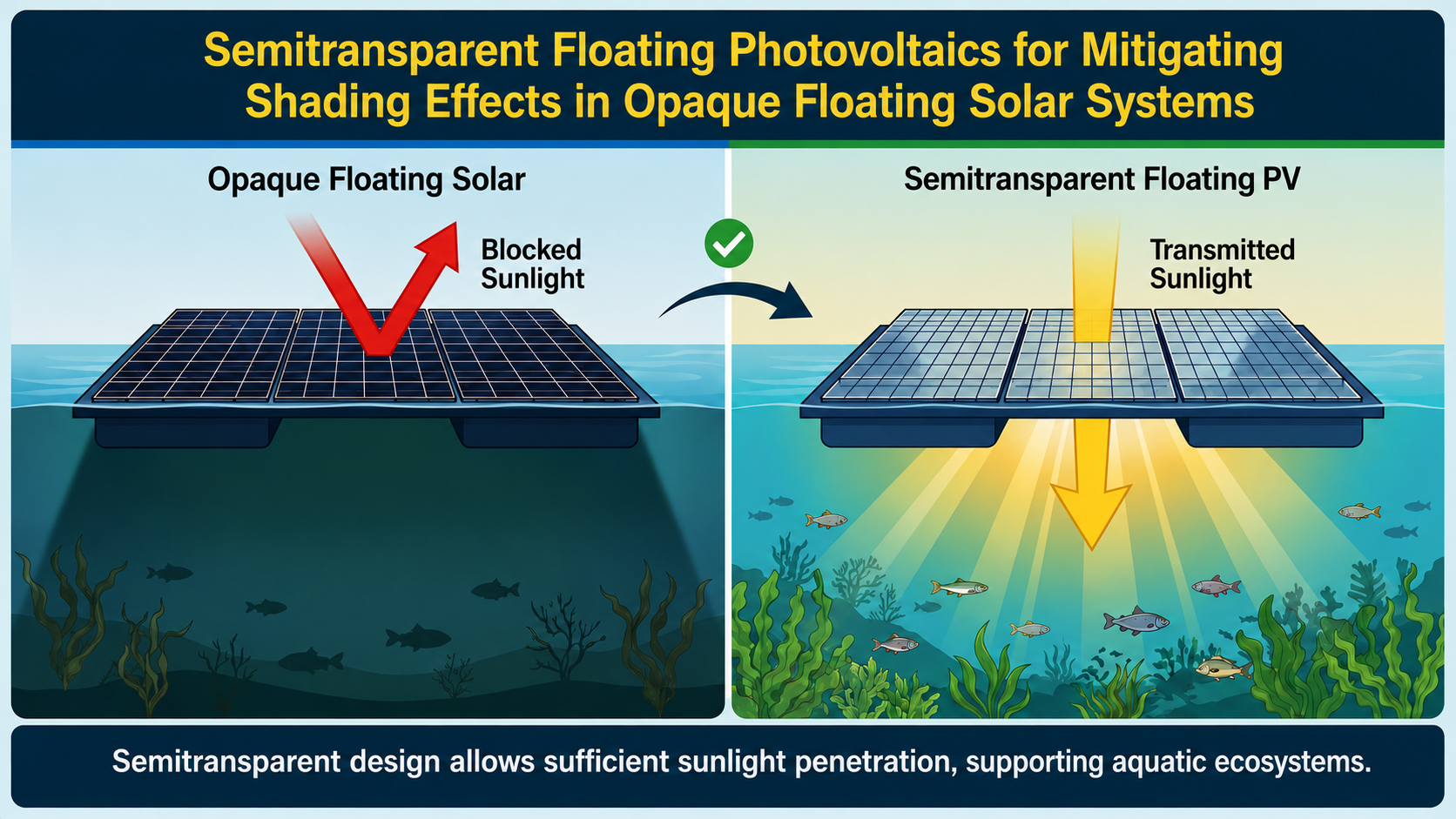
Floating photovoltaic (FPV) systems have emerged as a promising solution to expand solar energy deployment without competing for valuable land resources. However, the rapid expansion of conventional FPV systems based on opaque crystalline silicon modules has raised concerns regarding their environmental impacts on aquatic ecosystems, particularly due to excessive shading and altered light penetration. Semitransparent PV technologies offer an alternative approach by enabling partial light transmission while maintaining electricity generation. This review examines semitransparent FPV as a sustainable shading alternative to conventional opaque FPV systems. The design principles of semitransparent PV devices and floating PV systems are first reviewed to establish their technical foundations. Recent studies on semitransparent FPV applications are then discussed, with a focus on light management and interactions with aquatic ecosystems. Evidence suggests that spectrally selective light transmission can support beneficial photosynthetic activity while mitigating adverse ecological impacts associated with excessive shading. The review concludes by outlining key technical challenges and research gaps that must be addressed to enable the sustainable deployment of semitransparent FPV systems.